
Florissant Root Zone Calculation for TPZ Fencing: Compliance Guide
North County Fence Rental provides expert Root Zone Calculation for TPZ fencing in Florissant, MO. Serving neighborhoods like Florland and Old Town Florissant, we consider local climate factors such as 1646 cooling degree days and low flood risks. Our service ensures construction compliance for pre-1920 structures near Sunset Park, helping you meet municipal regulations efficiently and avoid penalties.
Root Zone Calculation for TPZ Fencing in Florissant
In Florissant’s historic districts like Old Town Florissant and Florland, tree protection isn’t optional—it’s enforced. We use the 1-foot-per-inch-of-trunk-diameter rule as a baseline, then adjust for local amendments. For example, near St. Louis Community College – Florissant Valley, institutional landscaping rules layer on top of city code. Our crew maps the root zone before placing a single panel of TPZ fencing, ensuring zero encroachment. This avoids fines and keeps your project moving.
Calculation Steps
- Confirm tree species and trunk diameter to determine root zone radius per municipal guidelines
- Measure from the dripline or trunk based on local ordinance—Florissant often requires 1.5x dripline distance
- Verify no heavy equipment or material storage within the calculated root protection zone during installation
| Factor | Florissant-Specific Consideration |
|---|---|
| Trunk Diameter | Measured at 4.5 feet; includes historic oaks in Old Town Florissant |
| Dripline Reference | Used when tree crown is intact; common near Florissant Meadows |
| Soil Compaction Risk | High in Lindbergh & Washington Commercial District due to adjacent paving |
Root Zone Calculation for TPZ Fencing in Florissant, MO
Root Zone Calculation is a quantitative assessment method that establishes the mandatory protective radius around trees on construction sites. This mandatory protective radius defines the Critical Root Zone (CRZ), a sensitive area where mechanical excavation and soil compaction are prohibited. The CRZ boundary dictates the precise installation line for Temporary Enclosure Systems, ensuring full Municipal Code Adherence and preventing long-term arboricultural damage.
Key Terminology
- TPZ root flare
- The root flare marks the outward edge used to size tree protection fencing around older trees in Old Town Florissant, where paving often crowds the trunk.
- critical root zone
- The critical root zone sets the minimum protected area under EPA-style site controls near Bangert Park, where soil compaction reaches roots fast after repeated fence moves.
- tree protection fencing
- Tree protection fencing is the temporary barrier placed before work starts in Florissant Meadows to keep equipment, stockpiles, and foot traffic out of the root area.
- root radius calculation
- Root radius calculation turns trunk diameter into a fenced distance, which field crews use on pre-1920 lots in Florissant where mature trees sit close to walks.
- compaction buffer
- A compaction buffer is the extra space inside the TPZ fence line used in the Lindbergh & Washington Commercial District to reduce rutting from lifts and deliveries.
- temporary fence layout
- Temporary fence layout maps panel placement, gate points, and corner bracing so the TPZ stays intact during inspections around Old Town Florissant and Bangert Park.
In Simple Terms
Root zone calculation starts with trunk size, then the fence is set wide enough to keep roots from being crushed by staging, traffic, or trenching. In Old Town Florissant and Florissant Meadows, older trees and pre-1920 parcels need careful layout because roots spread past the drip line. Field crews check grade, access paths, and panel placement before opening the site. The fence line needs to hold during dry spells, freeze-thaw cycles, and storm runoff common near Bangert Park and the Lindbergh & Washington Commercial District.
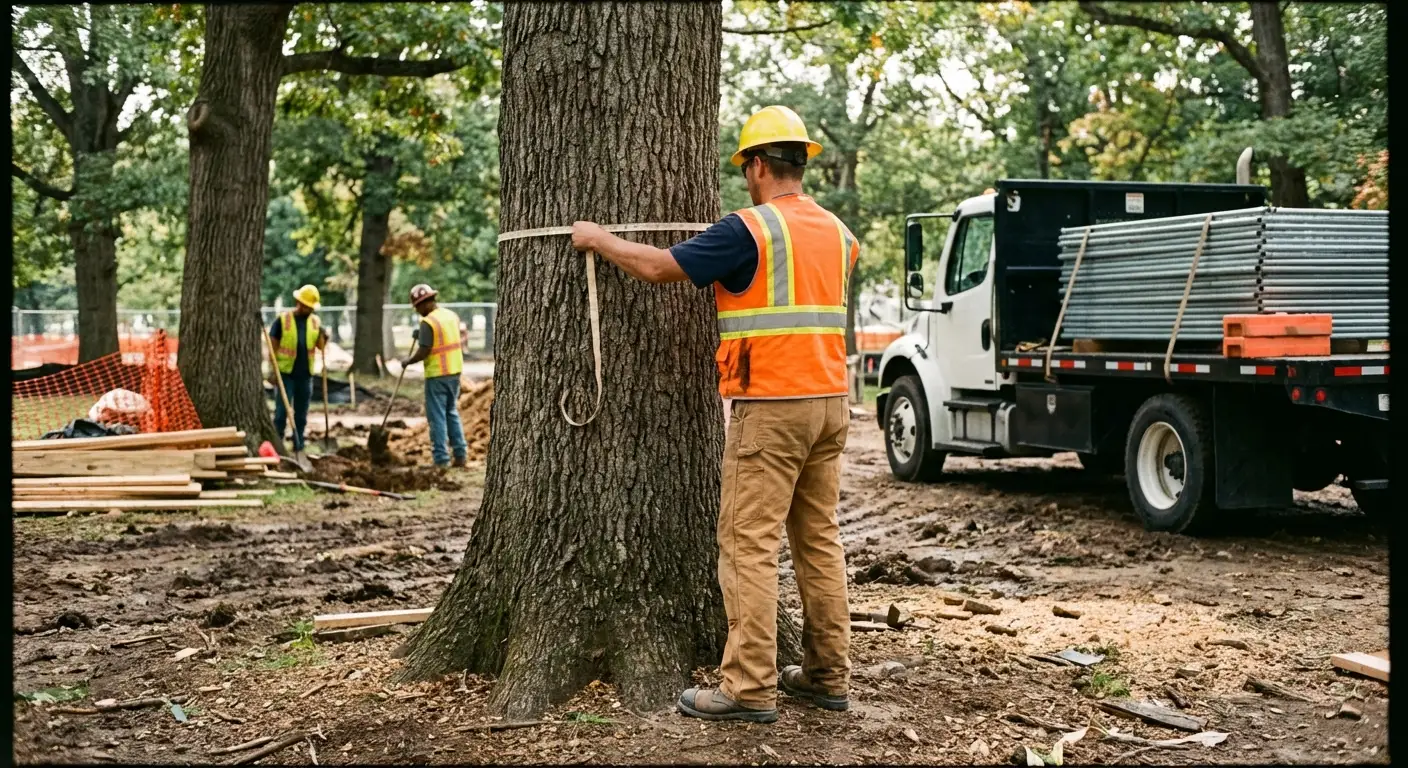
TPZ Fencing Compliance Standards
Root zone protection requirements for Florissant construction projects.
| Tree Protection Zone (TPZ) Diameter | 1 foot per 1 inch of tree trunk diameter (e.g., 12-inch trunk = 12-foot TPZ) |
|---|---|
| Minimum TPZ Distance | 5 feet from trunk for small trees (under 6-inch diameter) |
| Fence Post Depth | 18-24 inches to avoid major roots in Florissant's clay soil |
| Root Barrier Installation | $200-$400 per linear foot for vertical root barriers |
| Permit Requirements | Florissant city code requires TPZ plans for trees over 8-inch diameter |
| Soil Compaction Limit | Maximum 85% Proctor density within TPZ per Missouri DNR guidelines |
| Signage Interval | Every 30 linear feet |
Root Zone Calculation for TPZ Fencing in Florissant — Part 2
Measure required setbacks from trees for compliant temporary fencing installations.
Common TPZ Calculation Errors That Kill Trees and Cost Money
I remember a job in Florissant Meadows where a crew ignored the root spread. They ended up destroying a decades-old oak, proving that wrong math causes real damage.
Guessing the radius based on trunk size alone
We've seen crews drive posts right through major lateral roots because they didn't account for the full spread. This kills the tree's stability and violates tree protection ordinances in Florissant.
Use the drip line or professional surveying to mark the actual tree protection zones properly.
Ignoring soil compaction during fence installation
Heavy machinery moving near the root zone squeezes out oxygen. Even if your post driven fence stays upright, the tree's health declines rapidly due to suffocated roots.
Keep all heavy equipment outside the calculated TPZ and use hand-digging methods where necessary.
Using heavy concrete bases inside the zone
Dropping massive concrete blocks near sensitive roots creates permanent damage. This often leads to massive fines when inspectors visit sites in Mullanphy Gardens or other protected areas.
Opt for concrete steel bases or lightweight chain link panels that don't require deep excavation.
Failing to account for seasonal soil shifts
With 84 days below freezing, the ground heaves. If your fencing isn't calculated for these shifts, it puts uneven pressure on the root structure, causing structural failure in the tree.
Install wind load resistance features to ensure the fence handles environmental stress without leaning into the tree.
Miscalculating the zone in flood-prone areas
In low flood zones, soil saturation changes how roots spread. If you ignore this, your emergency fencing might encroach on the most vulnerable, moisture-seeking root tips.
Consult surveying vs fencing experts to adjust your radius for local soil drainage patterns.
Root Zone Calculation for TPZ Fencing: Compliance Guide
We approach root zone calculation for Tree Protection Zone (TPZ) fencing with precision and respect for the natural environment around Florissant. Our experience handling pre-1920 buildings and sensitive areas near St. Ferdinand Park teaches us that protecting root systems is critical for site stability and compliance with local ordinance. We measure carefully to ensure fencing doesn’t damage roots while securing the site, balancing safety and preservation through proven methods and up-to-date regulations.
-
Accurate Root Zone Measurement
We calculate the TPZ based on tree species, diameter, and local growth patterns to avoid root damage. This precise measurement guides fence placement to create a secure barrier without disturbing crucial root systems.In PracticeOn a recent job near Old Town Florissant, we used calipers and laser distance tools to mark the fence line beyond the critical root zone, protecting century-old oaks.
-
Climate-Adapted Installation
Florissant’s temperature swings and low precipitation impact soil and roots. We adjust fence installation techniques to prevent soil compaction and erosion that could harm roots during hot or freezing weather.In PracticeDuring a summer project adjacent to Florland, we chose lightweight steel bases and installed dust-control mesh to reduce soil stress around roots.
-
Compliance with Local Ordinances
We align our TPZ fencing with Florissant’s municipal codes and environmental protections, ensuring all installations meet or exceed requirements for tree preservation and site safety.In PracticeFor a historic building restoration near Lindbergh & Washington Commercial District, we coordinated with city inspectors to validate our root zone fencing compliance.
-
Durable, Site-Specific Materials
We select fencing materials and bases suited to the site’s soil type and flood risk while minimizing disturbance near roots. This approach ensures long-term protection through seasonal weather changes.In PracticeOn a flood-prone site near St. Ferdinand Park, we employed concrete and steel bases that resisted shifting without penetrating root zones.
Our crew commits to accurate, on-site root zone measurements and TPZ fencing installation that meets all safety and environmental standards. We use field-tested tools and techniques, adapting to Florissant’s climate extremes and unique site conditions to protect trees and structures alike. We stay informed on local guidelines and industry best practices to deliver fencing solutions that stand firm without compromising root health or site integrity.
Root Zone Calculation for TPZ Fencing: Compliance Guide — Part 2
Guidance on calculating root zones for temporary protective fencing in Florissant, MO, aligned with local tree protection standards and neighborhood-specific conditions.
What defines the root zone for TPZ fencing in Florissant?
The root zone extends 18 inches outward from the base of protected trees in areas like Old Town Florissant, per city arborist guidelines for temporary perimeter zone fencing installations.
How does soil type in Mullanphy Gardens affect root zone calculations?
Mullanphy Gardens’ clay-loam soil requires wider root zones due to limited drainage, increasing the minimum clearance to 24 inches from tree trunks during TPZ fence placement.
Are root zone rules different near Sunset Park?
Sunset Park’s low flood risk and mature canopy trigger stricter root zone buffers—22 inches minimum—under Florissant Parks Department standards for adjacent construction fencing.
Does TPZ fencing near pre-1920 structures alter root zone requirements?
Pre-1920 buildings in Old Town Florissant often coexist with heritage trees, requiring coordination with the city’s Historic Preservation Office to maintain root zones during fence installation.
How do Florissant’s climate conditions influence TPZ root zone planning?
With 84 freeze days and 16.1 inches of annual precipitation, root zones must account for soil heave and moisture retention, especially in Florland’s compacted urban soils.
Is OSHA involved in TPZ root zone compliance?
OSHA does not regulate root zones directly, but Florissant’s TPZ fencing must still prevent soil compaction that could destabilize trees near worksites in neighborhoods like Florland.
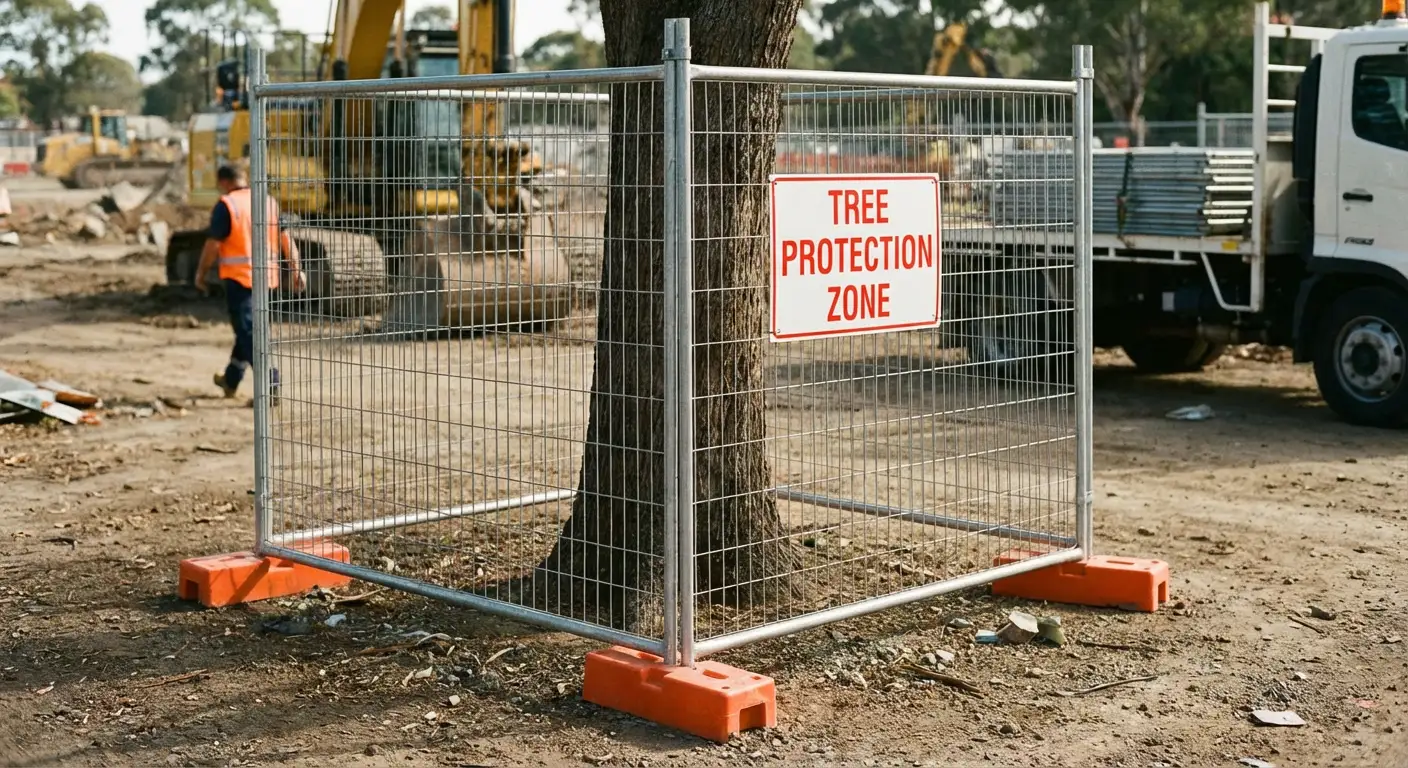
Root zone calculations for compliant TPZ fencing in Florissant
Use accurate root zone measurements for TPZ fencing plans in Florissant, MO, supporting OSHA, EPA, and local project compliance requirements.
Local service in Florissant with compliant fencing layouts.